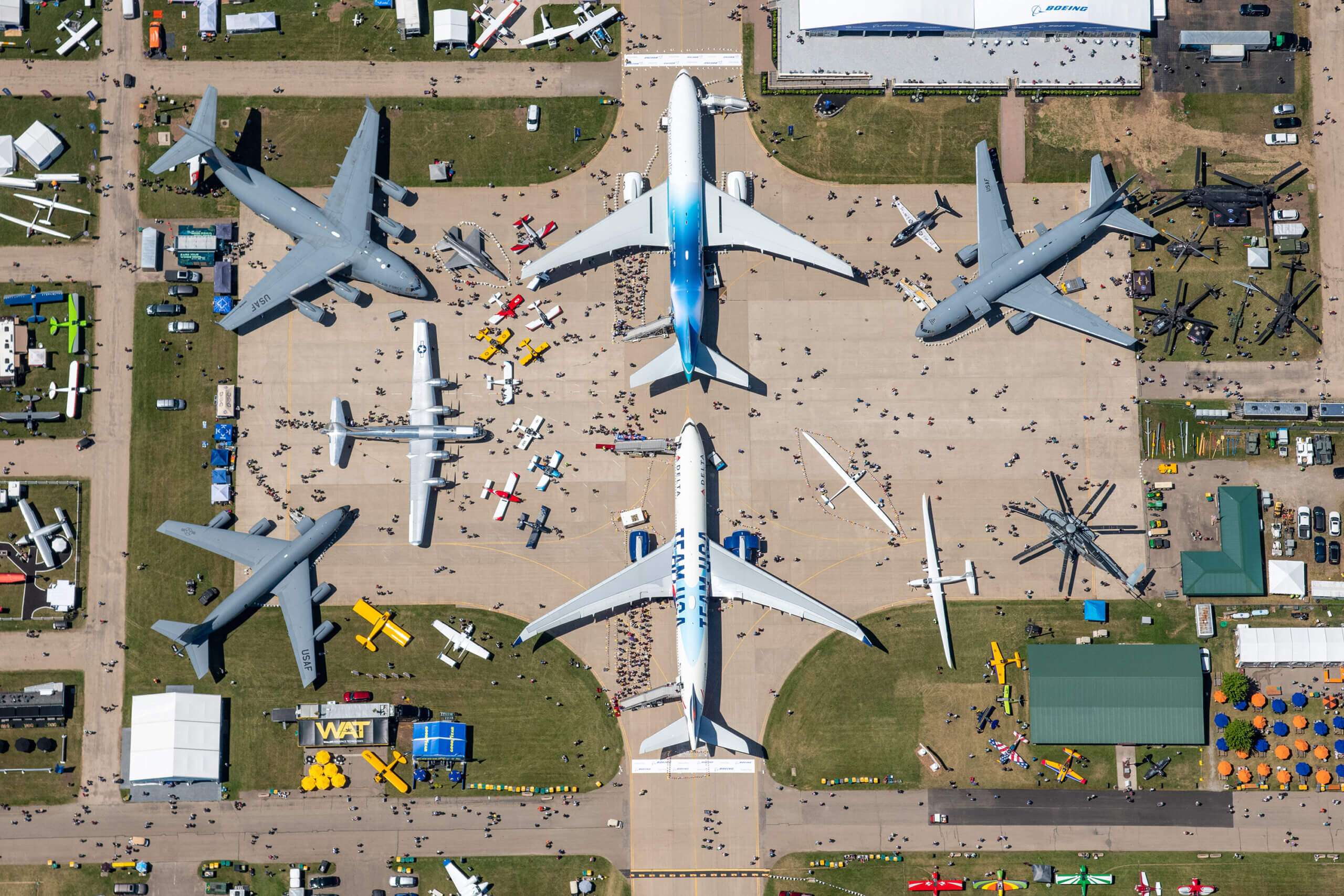
Aviation trade shows, fly-ins, conferences, and simulator events can consume significant time and budget. The booth may stay busy, the team may collect badges, and social channels may fill with event photos. Yet weeks later, the commercial impact is often difficult to identify.
Effective aviation event marketing begins before the floor opens and continues long after equipment is packed. The event is a distribution channel, not a strategy. Before investing in a larger booth, make sure the offer, audience, and follow-up system are clear.
Define the commercial purpose
An event cannot be evaluated well if every possible objective is treated equally. Decide whether the priority is sales, distribution, partnerships, media coverage, product feedback, recruitment, customer retention, or market entry.
Choose a small set of measurable outcomes. These might include scheduled partner meetings, qualified opportunities, product demonstrations, media interviews, reseller discussions, captured customer feedback, or follow-up proposals.
Build the meeting calendar early
The most important conversations rarely happen by accident. Identify customers, prospects, partners, media, creators, suppliers, and industry organizations expected to attend. Begin outreach early with a specific reason to meet.
A good invitation is more effective than “stop by our booth.” Offer a relevant product demonstration, partnership discussion, interview, briefing, or opportunity to review a proposed initiative.
Lead with value before asking for time. Share a useful briefing, compatibility assessment, event guide, market observation, or tailored concept. Relevant reciprocity works because it demonstrates competence, not because it creates an obligation.
Segment outreach across warm relationships, carefully researched cold targets, free content, and paid event promotion. These are distinct channels with different expectations. Master the message and follow-up in one before indiscriminately increasing volume across all four.
Design demonstrations around a story
Hardware and aircraft attract attention, but visitors remember an experience with a clear purpose. Decide what the demonstration should prove and what action should follow it. Train booth staff to explain the value concisely, qualify interest, and record meaningful notes.
Use the value equation when designing the demonstration. Make the desired outcome visible, increase confidence through proof, shorten the time to understanding, and minimize the effort required to experience the product. A focused five-minute demonstration can create more commercial clarity than a long feature tour.
Plan content before arrival
Create a shot list, interview list, announcement calendar, and approval process. Capture product demonstrations, customer reactions, partner conversations, team expertise, and the context of the event. This produces a useful library rather than a collection of unrelated booth photos.
When partners are involved, agree on tags, collaborative posts, messaging, and delivery timing in advance.
Make follow-up specific
Sort contacts by opportunity type and urgency. Reference the actual conversation, assign an internal owner, and propose a concrete next step. A generic message sent weeks later wastes the context created in person.
Define stages before the show: contact, engaged lead, qualified opportunity, scheduled next step, proposal, and closed outcome. Badge scans are contacts, not pipeline. The qualification notes are often more valuable than the count.
Content should also continue after the event through recaps, demonstration highlights, partner features, educational clips, and announcements arising from meetings.
Evaluate downstream value
Measure more than badge scans. Track meetings held, qualified opportunities, proposals, partnership progression, media placements, content created, and revenue influenced over time. Aviation sales cycles can be long, so maintain attribution beyond the first month.
The event itself is not the campaign. It is a concentrated moment within a longer commercial process.
Afterward, use a more-better-new review. First do more of the activities that demonstrably worked. Then improve the largest constraint, such as meeting quality, staff qualification, demonstration throughput, or follow-up speed. Only then add a new event, channel, or activation format.
MAX-G combines aviation marketing, event activation, and business development to help companies turn visibility into lasting opportunities. Contact MAX-G to plan your next event strategy.